Micronutrients from Nature
Natural sources and roles of essential vitamins and minerals
Understanding Micronutrients
Micronutrients are vitamins and minerals needed in smaller quantities than macronutrients (protein, fat, carbohydrates), but they're equally essential for body function.
Nearly all micronutrients are available from whole foods in their natural forms, making food the primary source of these nutrients.
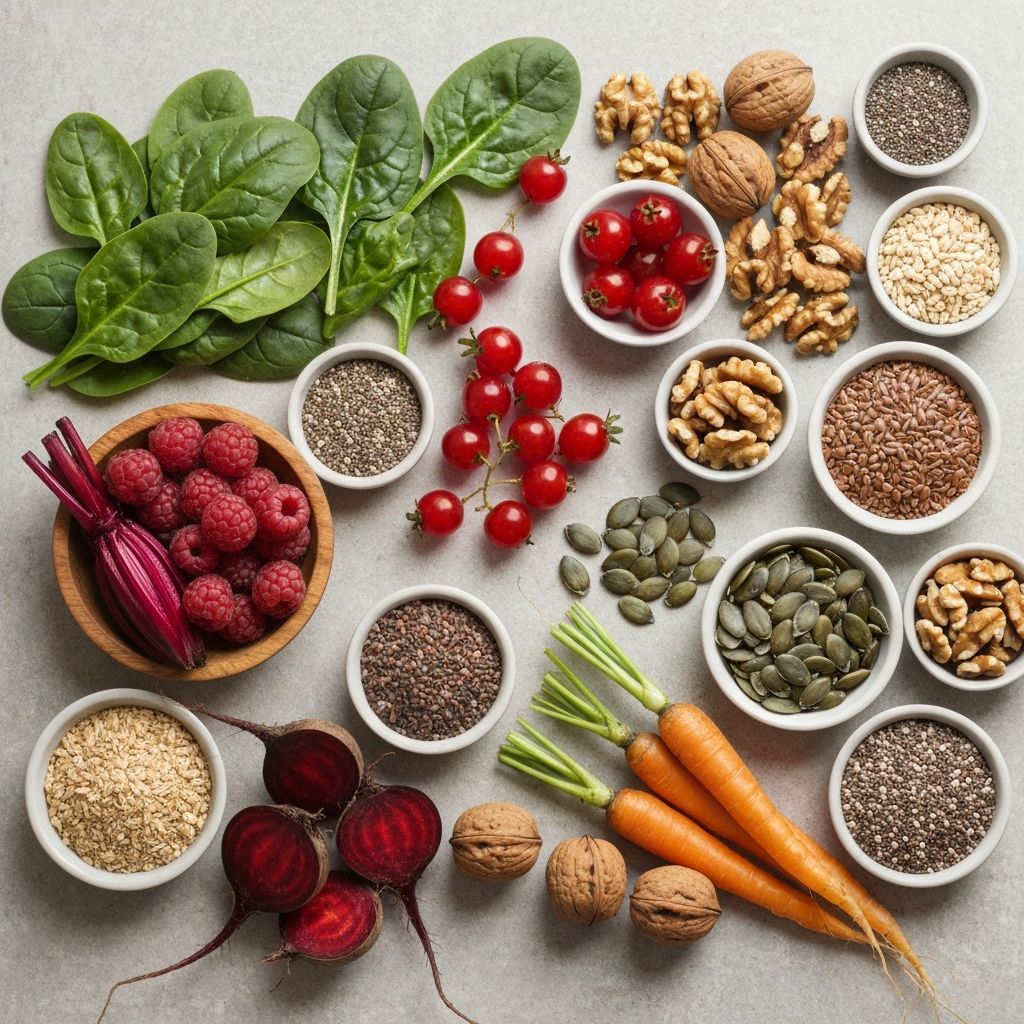
Essential Micronutrients and Their Sources
Fat-Soluble Vitamins (stored in body fat)
- Vitamin A: Leafy greens (spinach, kale), orange vegetables (carrots, sweet potato), liver—supports eye health and immunity
- Vitamin D: Fatty fish (salmon, mackerel), egg yolks, mushrooms, sunlight exposure—essential for calcium absorption
- Vitamin E: Nuts, seeds, vegetable oils, leafy greens—protects cells from damage
- Vitamin K: Leafy greens, broccoli, Brussels sprouts—crucial for blood clotting and bone health
Water-Soluble Vitamins (not stored, need regular intake)
- B Vitamins: Whole grains, legumes, eggs, meat, dairy—essential for energy production and nervous system function
- Vitamin C: Citrus fruits, berries, peppers, tomatoes—supports immunity and collagen formation
Essential Minerals
- Iron: Red meat, poultry, legumes, leafy greens—carries oxygen in blood
- Calcium: Dairy products, leafy greens, fortified plant milks, legumes—builds and maintains bones
- Magnesium: Nuts, seeds, legumes, whole grains, leafy greens—supports muscle and nerve function
- Potassium: Bananas, potatoes, leafy greens, legumes—regulates fluid and blood pressure
- Zinc: Nuts, seeds, legumes, meat, shellfish—supports immunity and wound healing
- Iodine: Seafood, seaweed, dairy, eggs—essential for thyroid function
Micronutrient Bioavailability
How the body absorbs and uses micronutrients varies. For example, plant-based iron is less readily absorbed than iron from meat, and vitamin D absorption requires fat intake. This is one reason variety and balanced meal composition support better nutrient absorption.
Combining different foods—such as having vitamin C with iron-rich foods—naturally enhances nutrient availability.
Information Limitations & Context
This article provides general educational information only. It describes micronutrient sources but does not constitute nutritional guidance, medical advice, or individual recommendations.
Individual micronutrient needs vary based on age, activity, health status, and other factors. Any concerns about your specific nutritional intake should be addressed with qualified healthcare professionals.